Convert between slope ratio, percentage, mm per metre and degrees. Instant results, live against Australian plumbing, drainage and accessibility standards.
Convert between slope ratio, percentage, mm per metre and degrees. Enter any value below — all fields update instantly. Use the slider to explore common slopes or type directly into any field.
Visual
Conversions — edit any value
Project Calculator
A digital level reads degrees, percentage and mm per metre straight off the surface — the same formats this calculator converts. All four are in stock.
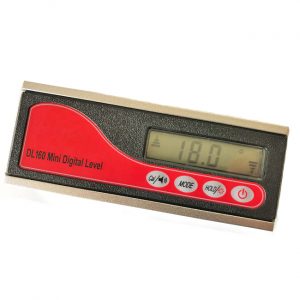 DL160
Compact digital level · 160mm
$139.95
DL160
Compact digital level · 160mm
$139.95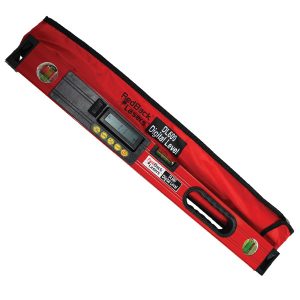 DL600
Digital level inclinometer · 600mm
$149.95
DL600
Digital level inclinometer · 600mm
$149.95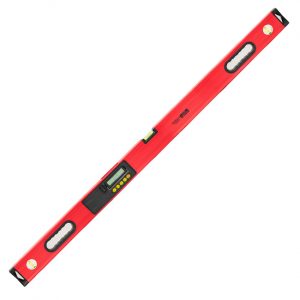 DL1200
Digital level inclinometer · 1200mm
$199.95
DL1200
Digital level inclinometer · 1200mm
$199.95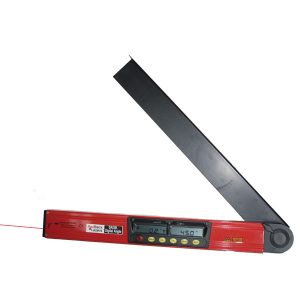 DA530L
Digital level + angle measure, with laser
$299.95
DA530L
Digital level + angle measure, with laser
$299.95Three ways in: enter a ratio, a percentage, a fall per metre or an angle. The calculator converts the other three instantly, and a diagram updates live so you can see what the grade actually looks like.
Type a ratio (1:100), a percentage (1%), mm per metre (10mm/m) or an angle (0.57°). All four fields are linked — edit any one and the rest follow.
Drop in a horizontal run or a vertical fall and the calculator gives you the other instantly at the ratio you’ve chosen. Switch units between mm and m on the fly.
A live context panel tells you where your slope sits against AS 3500 (drainage), AS 1428.1 (accessible ramps) and AS 3740 (wet areas) — so you know straight away if you’re inside spec.
They all describe the same thing: how much a surface drops over a given horizontal distance. The difference is how you express it.
Ratio (1:X) is the plumber’s format. 1:100 means the surface drops 1 unit vertically for every 100 units horizontally. It’s what you’ll see on plans and what Australian Standards reference.
Percentage (%) is the grade in civil and drafting work. 1% = 1 unit fall per 100 units run. Same thing as 1:100, different notation.
Fall per metre (mm/m) is what tradies usually call out on site: 10mm/m means 10 millimetres of drop per metre of run. Also the same as 1:100.
Degrees (°) is the actual angle off horizontal. 1:100 works out to about 0.57°. Useful when you’re working off architectural drawings or bench-mounting something.
Different trades and different standards use different formats. A plumber thinks in 1:X, an accessibility consultant thinks in degrees, a concreter thinks in mm/m. Being able to switch between them on the fly means you can cross-check a spec no matter how it was written.
Three standards cover the majority of fall requirements you’ll hit on site in Australia. The calculator above flags where your value sits against each one as you type.
Minimum 1:100 fall for stormwater drainage. Minimum 1:60 for above-ground sanitary drainage. Sets the floor for legally compliant surface drainage on most residential and commercial jobs.
View standard →Accessible ramps: maximum gradient 1:14. Walking surfaces: maximum 1:40 cross-fall for safe access. Applies to any build that requires DDA-compliant access.
View standard →Wet area floors: minimum 1:80 fall to waste. Shower recesses: minimum 1:60 for effective drainage. Covers all internal wet areas in residential construction.
View standard →A rough cheat sheet of the grades you’ll see most often. Exact figures depend on the spec, the standard and the job — always confirm against the drawing or the current code.
Minimum falls are exactly that — minimums. Settlement, debris, minor construction tolerance and long-term deformation all eat into the fall over time. If you’ve got the space, give it more than the minimum.
A surface that’s out by even half a degree of grade looks fine when you stand on it — until it rains, or until a wheelchair goes up it, or until a building surveyor gets their level out.
Ponding on a concrete slab, back-fall in a shower, a driveway that won’t pass off a building inspection — most of these come back to the same thing: fall that was set too fine and either wasn’t checked, or was checked with the wrong tool.
A spirit level is accurate to about 0.5mm/m at best. On a 10-metre run, that’s a 5mm window of uncertainty — enough to put you either side of a 1:100 spec without knowing it.
A digital grade laser lets you dial in an exact slope — 1:100, 1:60, 0.57°, whatever the spec calls for — and shoots a reference line across the whole job. You’re not working off a 600mm spirit level and a hope.
Set once, checked once, accurate across 100+ metres. That’s the difference between a slab that drains and a slab that’s a callback.
AS 3500.3 sets the minimum at 1:100 (1%) for surface stormwater drainage. For paved areas subject to ponding risk, designers often specify 1:80 or 1:60 to give headroom for construction tolerance and settlement.
Yes. 1% grade = 1 unit of fall per 100 units of run = 1:100. The calculator above converts between all four formats (ratio, percentage, mm per metre, degrees) live.
AS 1428.1 permits a maximum gradient of 1:14 (about 4.1°) for accessible ramps. 1:20 is preferred where space allows. Handrails on both sides and intermediate landings are required on longer ramps.
Under AS 3740, shower recesses require a minimum fall of 1:60 to the waste. General wet area floors outside the shower require at least 1:80. Most tilers build 1:50 to 1:40 in the recess for reliable drainage on tiled finishes.
Different industries adopted different conventions. Plumbing uses 1:X ratios because it maps cleanly to run/fall on a plan. Civil engineering uses percentage because it’s easier to add and subtract on longitudinal sections. Concreters use mm/m because they’re working with tape measures. Accessibility uses degrees because the compliance data came from international rehabilitation research. They’re all the same measurement, just different notation.
For short runs and a rough check, yes. For anything longer than a couple of metres, or anything that has to meet a specified fall, you want a grade laser or a dumpy level. A 600mm spirit level is accurate to about ±0.5mm/m — that’s a 5mm window over 10 metres, which is enough to put you outside a 1:100 spec without knowing.
Fall is the primary drop along the direction of flow (a path sloping toward a drain). Cross-fall is the sideways slope across that same surface — typically to shed water to one side, or to stay within an accessibility tolerance. AS 1428.1 caps cross-fall on walking surfaces at 1:40.
No. The calculator converts between slope formats and flags standard minimums. For a specific design decision — pipe sizing, structural loading, stormwater flow rates, accessibility compliance on a specific site — talk to a licensed practitioner. This tool is a reference, not a substitute for engineering advice.
RedBack digital grade lasers dial in exact slopes — 1:100, 1:60, any degree — and shoot an accurate reference line across the whole job. Built for Australian conditions, backed by 25 years of laser experience.
Top service.
SSteven BAUER1 week agoEasy purchase fast delivery
KKoby Boer2 weeks agoJust what I needed - accurate, easy to use
JJohn Klein-boonschate2 months agoGreat service
GGlen Z.2 months agoGood quality
RRob Thompson3 months agoThe help i got from Tim and the guys was second to none.....they returned my calls immediately and kept me in the loop looking for what I needed.....my purchase was expressed post so didn't hold me up with construction.....I wouldn't buy laser equipment from anyone else.....thanks guys
JJay Saunders6 months agoRedback lasers sent the product fast which saw me receive the product in no time. I also received a free upgrade to a lr730 which I was stoked about. The LR730 works a treat for getting heights set out precisely
KKaron Collier7 months agoAs I purchased it for my cousin to use and it has made the job so much easier with alot more jobs to do so it will be getting a workout But very happy with the product
BBradley Barber8 months agoWe just received our first rotating lasor level from RedBack and so far has been great Fast postage , easy ordering and arrived safe and works perfectly
BBearing Logistics8 months agoGreat customer service and open dialogue and follow up. 100% deserved the five stars. Well done