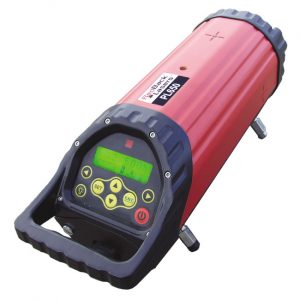
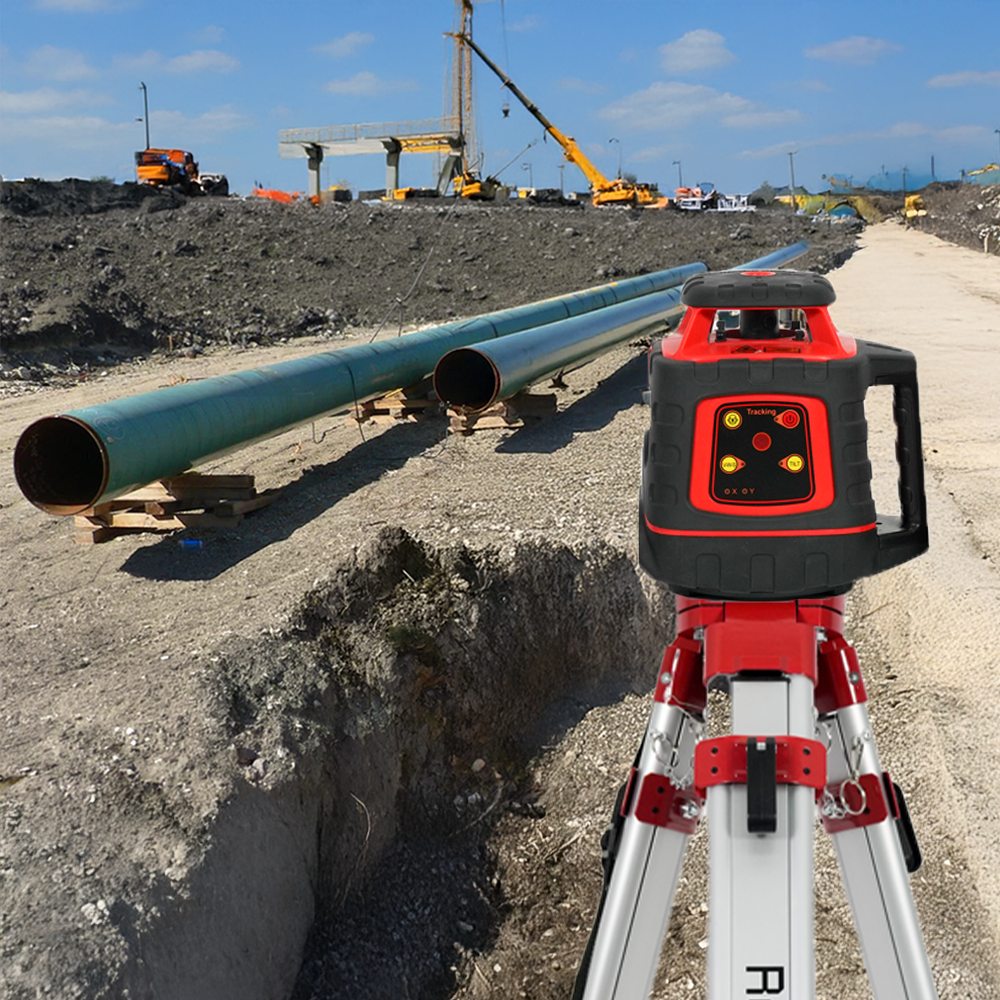
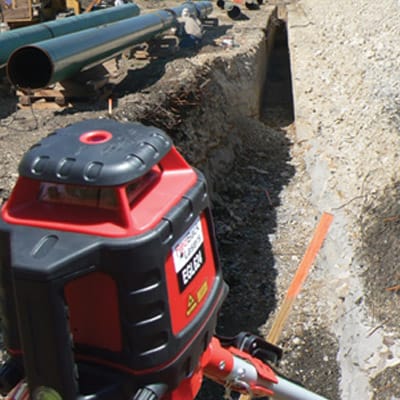
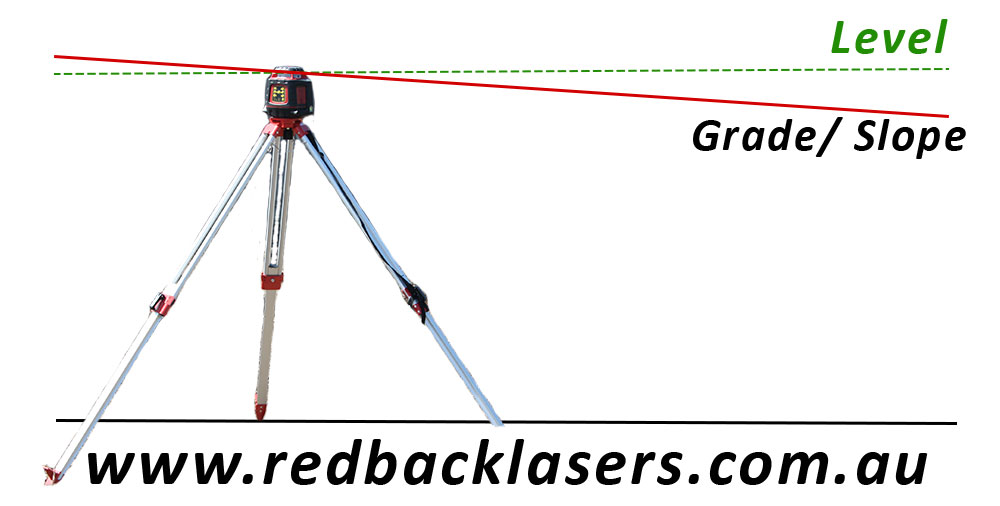
Pipe Lasers have a few advantages over Rotating Lasers for laying Pipe.
The most important is that it allows you to ensure both alignment & gradient at the same time, something Rotating Lasers can only do 1 at a time (and only certain rotating lasers feature vertical alignment as well).
Pipe Lasers also allow for quicker indication of position of the pipe – because using a visible reference is always quicker than needing to refer to a receiver.
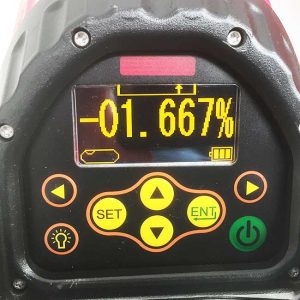
Being able to input Grade as a percentage into the Laser is by far the easiest & most accurate way to set Grades – making Pipe Lasers are more viable option over most Rotating Lasers where you have to use a remote to manually tilt the beam over.
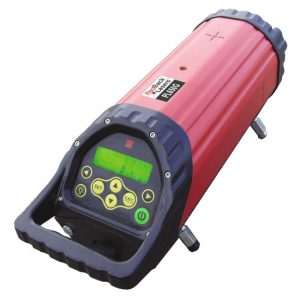
RedBack Pipe Lasers are available in either red (the PL650/DR100) or green (the PL650G/DR100G) laser outputs.
Both the PL650 Range & DR100 Range feature the same <5mW Class 3 power output – which is the maximum brightness you are legally allowed to sell & use in Australia for construction applications.
The green PL650G has a marginally smaller dot making it slightly more defined on the target plate than the PL650.The red PL650 has a higher operating temperature range (up to 40°C) compared to the green PL650G (up to 35°C), so for worksites with high operating temperatures we would recommend the red PL650.
The DR100/DR100G have a higher operating temperature range than the PL650/PL650, being rated to up to 50°C
Whichever laser you purchase you will be getting the same heavy-duty construction and professional-quality performance.
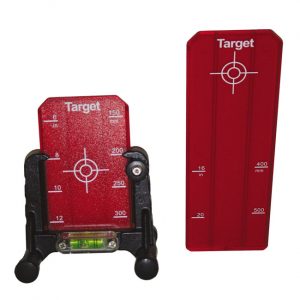
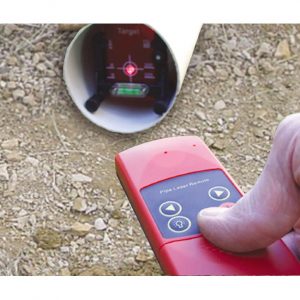
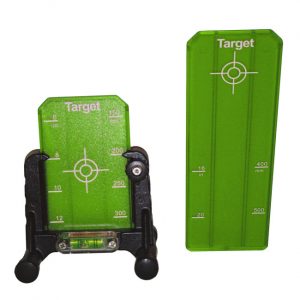
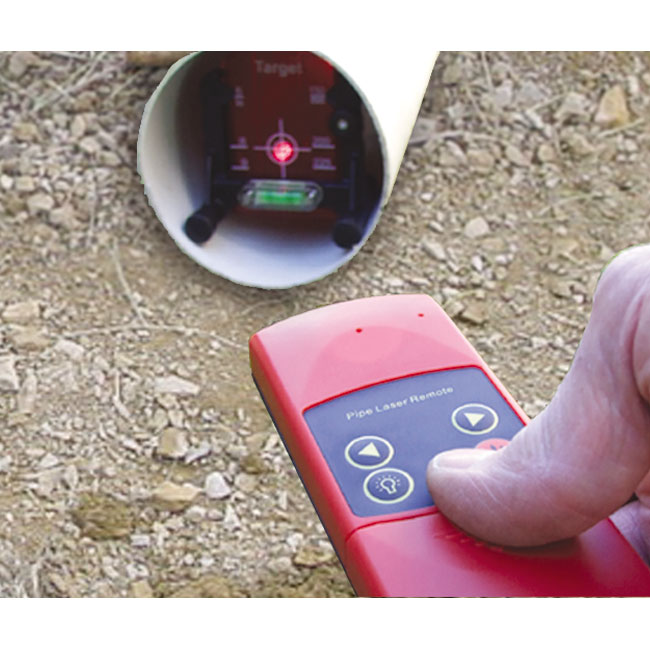
Pipe lasers are designed specifically for laying pipes at a particular grade. Pipe lasers produce a powerful laser dot, which is visible on a target plate mounted in a holder. The idea is to dig to ensure the Pipe is accurately & consistently tilting on the correct grade/slope/fall – to do this you need to try and get the Laser dot to sit inside the goal on the target. These lasers are often placed inside or on top of a pipe or on a tripod at the end of a pipe.
These lasers generally feature large & highly accurate grade settings to suit plumbing, earthmoving & civil applications.
Pipe Lasers are reasonably easy to choose between. The majority of Pipe Lasers tend to operate in a similar fashion – but there are a few nuances when it comes to individual models.
One of the main variations between Pipe Lasers is Laser Colour. RedBack Lasers offers both Red Beam & Green Beam Pipe Lasers in both the PL650 & DR100 Ranges.

Other important variations between models are the minimum diameter of Pipe the laser can fit inside, the operating temperature range that they work well within as well as the Gradient Range that a laser can set electronically.
All these factors need to be taken into consideration – but the core function of accurate grade & alignment of Pipe is something that all of RedBack’s Pipe Lasers excel with.
Nothing!
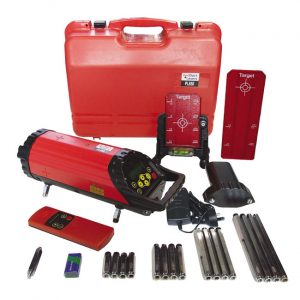
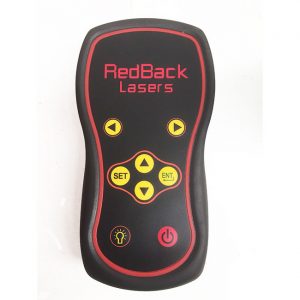
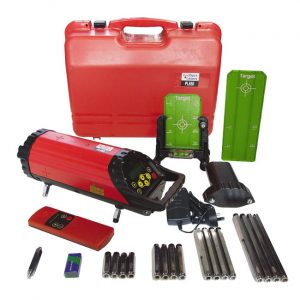
Unlike a lot of other laser brands on the market – All RedBack Pipe Lasers come complete with all the feet sets, targets, batteries & chargers etc. that are required to be able to operate your new Pipe Laser. They also come complete with a recent calibration certificate – the laser is ready to use out of the box.
No extras required – everything as standard.
If you don’t know/aren’t given grades as percentages for your job – there’s some simple maths involved to convert it into a percentage.
For instance – if you need to set a 1m fall every 60m (1 in 60) slope – you simple divide your fall by your distance (rise/run). Then times by 100 to convert it to percentage.
Eg. 1 divided by 60 (1/60) x 100 = 1.667%
DR100 Pipe Laser: How to Operate
RedBackLasers 1.1K views
Drain Right 100 Pipe Laser: What Comes In The Kit?
RedBackLasers 886 views
RedBack Lasers DrainRight Pipe Laser range DR100 & DR100G
RedBackLasers 199 views
ยฉ CMI Industries Pty Ltd 2022 – All Rights Reserved.

For best experiences, we use cookies to store and/or access device information. Consenting to these technologies will allow us to process data such as browsing behavior or unique IDs on this site. Not consenting may adversely affect certain features and functions.