Buying an Optical / Dumpy Level


On this page
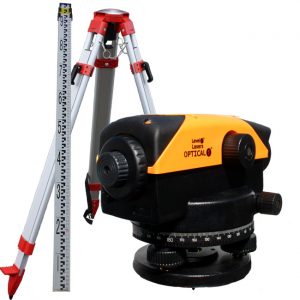
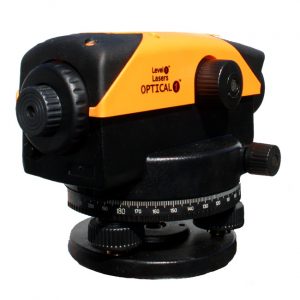
Dumpy Levels – also known as Auto Levels or Optical Levels – have been around a very long time and provide an accurate and reliable method of levelling.
How does a dumpy level work?
Dumpy Levels are auto levelling with the use of a wire suspended compensator that uses gravity to find level. These compensators have a low degree of self levelling, so dumpies have a bulls eye vial which is to get the compensator into self levelling range.
It’s worth noting that the vial does NOT do the actual levelling – so as long as the bubble is mainly inside the circle, the compensator takes over and auto levels for you.
What to look for when purchasing a dumpy level?
Clarity of the optics
The first thing to do is take a look through it and check out the clarity of the optics. A better quality dumpy level (price is not always a good indicator of this) will have a clear image through the optics – a cheaper one will be a bit more milky. The clearer you can see the staff, the more accurate you can be.
Accuracy rating
The accuracy of dumpy levels is extremely high – generally much higher than you can work to – so for the purpose of building and construction, the rating on a particular dumpy compared to another is not hugely important.
Magnification
Next feature to look at is magnification, the most popular being 20x, 24x, 26x, 28x and 32x.
Higher magnification does not necessarily mean a better dumpy level; as you increase magnification, the field of view through the device narrows – so at 32x and beyond you can only see a very small area, and it can sometimes be difficult to locate and focus in on the staff.
The sweet spot for most users is between 24x and 28x magnification. Again – take a look through it before you buy if you can, to see for yourself.
The compensator
Compensators are basically a pendulum suspended by wires, and their movement is dampened either by air or magnets. There are some compensator accuracy specifications, but realistically they do not tell the whole story.
Price is a reasonable indicator here – if the dumpy you are looking at is substantially cheaper than the average, then the self levelling compensator is probably not as durable as the more expensive units.
Build quality
Finally, build quality of the casing and levelling base. Ideally you want a cast metal base plate, as these are generally stronger than plastic ones and less liable to cross threading onto the tripod. You also want to see a mainly cast metal casing on the dumpy itself.
Looking after your dumpy level
Once you have purchased your dumpy level you want to look after it. Check it – or get it checked – for calibration on a regular basis, particularly after any drops. Wire suspended compensators do not like violent drops or vibrations, and often it is not worth repairing a damaged compensator in a dumpy level if a wire breaks or is stretched.
If the level gets wet, dry it off before placing it back in the case – moisture in the optics is not a good idea.
Precautions when using include:
- Do not look into the Sun, or the reflection of the sun
- Do not set up the dumpy level at the same height as any laser levels on site
The gear for this job
Not sure which suits you? Give us a call — we'll talk it through.